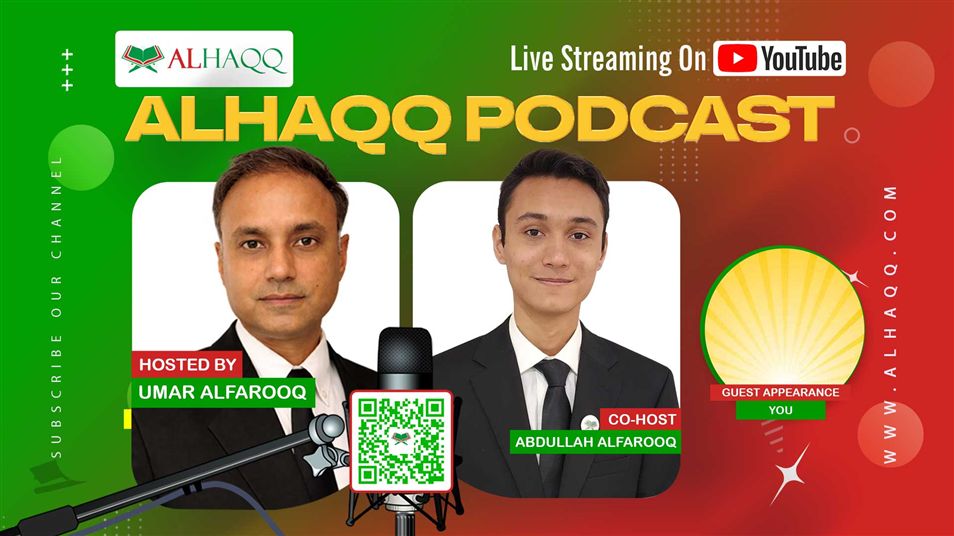
This 15th episode of the AlHaqq.com podcast features hosts Umar AlFarooq and Abdullah analyzing the structural and theological vulnerabilities of modern extremist movements and the flaws of the current global monetary system.
Analysis of Extremist Movements (0:06 - 30:10)
Leadership Models: The hosts contrast the "Xerxes model" of leadership—a fragile, top-down structure where leaders hide in the rear—with the "Leonidas model," a resilient, decentralized approach where leaders stand on the front lines alongside their people (1:02-3:01).
Theological Critique: The episode argues that extremist groups rely on a "three-legged stool" of manipulation: selectively cutting Quranic fragments, welding them to specific historical narrations, and using medieval commentaries to abrogate peaceful verses (3:37-4:06).
Strategic Alternatives: Instead of futile asymmetric violence, the hosts advocate for the Quranic principle of hijra (migration)—relocating to establish freedom, community, and resilience—as the proper response to systemic oppression (8:33-10:14).
Monetary Systems and Riba (21:00 - 1:39:48)
Redefining Money: The hosts define the intrinsic characteristics of true currency, including durability, divisibility, portability, intrinsic value, and acting as a store of value (33:16-41:20).
Critique of Fiat/Debt Systems: They argue that modern fiat money (which lacks these traits) and debt-based banking systems are inherently mathematical paradoxes leading to perpetual indebtedness. The episode references historical shifts, such as the 1944 Bretton Woods Agreement and the abandonment of the gold standard in 1971, to explain how these systems were established (41:20-58:08).
Path Forward: The hosts conclude by calling for the re-establishment of authentic, decentralized community infrastructure and the use of real, metal-backed currency as a means of achieving self-determination and resisting systemic oppression (1:24:42-1:39:48).